
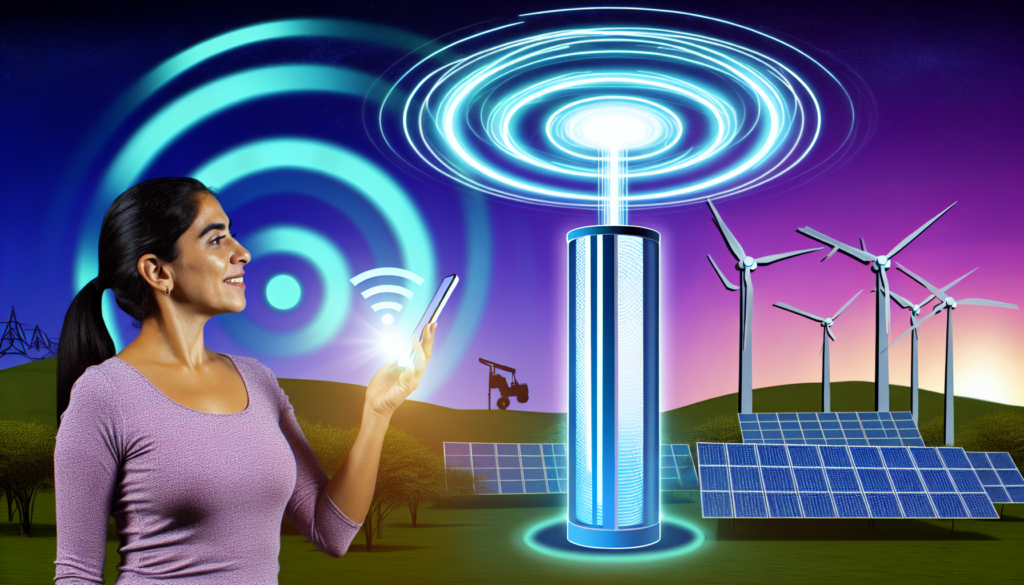
Wireless power transfer (WPT) is moving from a novel idea to a practical tool. It allows energy to pass from a source to a device without a wire. Many people already use it when they place a phone on a charging pad. Yet the near future points to wider uses, higher power, and smarter control. Researchers, firms, and regulators are now shaping rules so that WPT can grow in safe and useful ways.
WPT matters because it can reduce wear on cables, limit exposed metal contacts, and make charging easier in busy settings. It can also support devices in places where plugs are hard to use, such as hospitals, factories, and transit systems. At the same time, WPT must meet clear goals for safety, efficiency, and cost. These goals will guide which forms of WPT expand first over the next few years.
How Wireless Power Transfer Works
Most WPT systems rely on electromagnetic fields. A transmitter creates a changing field, and a receiver turns that field back into electrical power. The details differ by method, but the core idea is the same: energy is coupled across space. The near future will likely include a mix of methods, each suited to a specific range, power level, and setting.
Inductive and Resonant Charging
Inductive charging is the most common approach for consumer devices. It uses coils placed close together, often separated by a few millimeters. Because the distance is small, efficiency can be high, but alignment matters. If a phone is off center, charging may slow and more heat may form.
Resonant charging extends this idea by tuning coils to the same frequency. This can improve tolerance to misalignment and slightly increase usable distance. In practice, it can support small gaps across furniture surfaces or within enclosures. In the near future, improvements in coil design and control circuits may reduce losses and make charging in public spaces more robust.
Radio Frequency and Directed Power
Radio frequency (RF) power transfer can work over longer distances than inductive methods, but it usually delivers less power. It is often framed as a way to power low-energy sensors, tags, or small devices that can harvest tiny amounts of energy. Directed power, such as microwave or optical approaches, aims to send energy in a narrow beam. This can raise delivered power at distance, but it also raises stricter safety and tracking needs.
In the near term, RF energy harvesting is likely to expand in industrial sensing, smart buildings, and logistics. Directed methods may see limited use in controlled sites, where line of sight is stable and safety systems are strong. In both cases, careful measurement and compliance will define how fast deployment can occur.
Where WPT Is Likely to Grow First
Early growth tends to happen where WPT solves a clear problem. The strongest cases are those that value convenience, sealed designs, and reduced maintenance. These benefits are easy to measure and can offset added system cost. Several sectors stand out as near-term adopters.
Consumer Electronics and Public Charging
Phones, earbuds, watches, and tablets will keep driving the market. People are now used to charging pads at home. The next step is better integration into desks, cars, and public venues. Airports, cafés, and libraries can reduce cable clutter and expand access to charging with fewer exposed parts.
Another likely change is multi-device charging with better device detection. Smarter transmitters can adjust power by need and reduce idle losses. Standards and interoperability will remain central, because users expect a pad to work across brands and models.
Healthcare, Industry, and Harsh Settings
Hospitals and clinics value surfaces that are easy to clean and devices that can be sealed. Wireless charging can support carts, handheld tools, and some wearable monitors. In these settings, reducing connector wear is not only convenient but also a reliability issue.
Factories and warehouses face dust, vibration, and repeated plug cycles. WPT can support sensors, scanners, and autonomous systems that pause at a charging point. For robots, fast and repeatable alignment can be built into docking stations. This can lower downtime and reduce maintenance across many devices.
Electric Vehicles and Mobility
Wireless charging for electric vehicles (EVs) is advancing through pilot programs and standard work. Static charging, where a car parks over a pad, is the most near-term approach. It can improve ease of use, especially for fleet vehicles that return to the same depot each day.
Dynamic charging, where vehicles charge while moving, is more complex. It needs roadway hardware, grid upgrades, and coordination across many actors. For the near future, the most realistic progress is likely in short stretches, such as bus lanes, taxi stands, or depot queues, where routes are fixed and benefits are clear.
Key Challenges and Research Directions
The future of WPT will depend on how well it meets core constraints. Efficiency must improve so that energy is not wasted as heat. Systems must also manage electromagnetic exposure within accepted limits. Finally, cost and reliability must match the needs of each application.
Researchers are working on better power electronics, coil materials, and control algorithms. Foreign object detection is also important, because metal objects can heat under a field. Another focus is communication between transmitter and receiver, so the system can identify devices, set safe power levels, and support billing in public sites. Cybersecurity will matter as well, since charging points may connect to networks and payment systems.
Regulation and standards will shape adoption. Clear test methods help firms compare products and help users trust performance claims. As standards mature, integration into furniture, vehicles, and infrastructure becomes simpler. This reduces risk for buyers and speeds up large deployments.
Conclusion: The Near Future of Wireless Power
Wireless power transfer is set to expand beyond the phone charger. In the near future, the most visible growth will come from improved consumer charging, wider public access, and more robust use in healthcare and industry. EV charging will progress through pilots and fleet sites, where benefits are easiest to capture.
The long-term promise of WPT is a world with fewer cables and more seamless power access. Achieving that promise will require efficient designs, strong safety practices, and clear standards. With steady progress in these areas, WPT can become a common part of daily infrastructure rather than a special feature.
Disclaimer: This page contains links that are part of different affiliate programs. If you click and purchase anything through those links, I may earn a small commission at no extra cost to you. Click here for more information.
