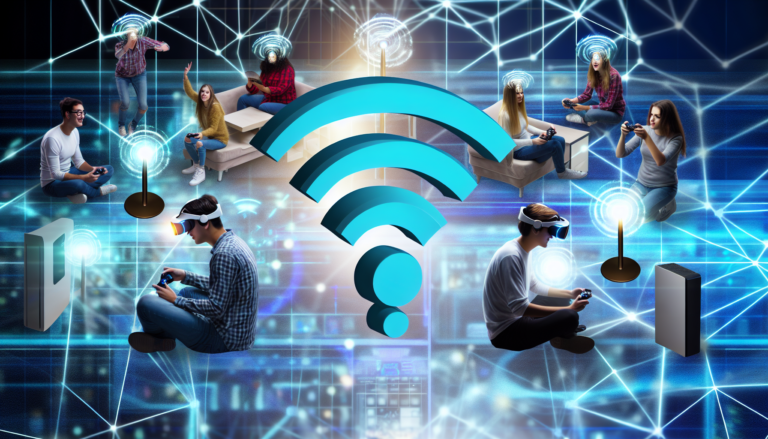

Cloud gaming lets you play video games on a remote server. The game runs in a data center, not on your device. Your screen shows a live video stream, and your controller sends inputs back over the internet. This model is used by services such as NVIDIA GeForce NOW, Xbox Cloud Gaming, and Amazon Luna.
Many analysts ask if this shift will make consoles and gaming PCs less important. The answer depends on more than hype. It depends on networks, costs, game libraries, and how players value speed, image quality, and ownership.
How Cloud Gaming Works
In cloud gaming, a provider assigns you a virtual machine with a GPU. The game renders frames on that server. Those frames are compressed into video and sent to you in real time. Your device decodes the stream and shows it on a screen.
Your inputs travel the other way. Each button press must reach the server fast, or the game will feel slow. This is why stable latency matters as much as download speed. Many services also adjust resolution and bitrate on the fly to avoid stutter.
Pros: Why Cloud Gaming Looks Promising
Lower Hardware Barriers
A main benefit is access. Cloud gaming can run on a low cost laptop, a phone, or a smart TV. Players may not need a new console or a high end GPU. This can widen the audience, especially where device prices are high.
Fast Start and Simple Updates
Cloud platforms can reduce setup time. In many cases, a user clicks play and the game starts. Updates and patches happen on the server side. This removes long downloads and saves local storage.
Portability and Cross-Device Play
Because the game is not tied to one machine, players can shift between screens. A session may begin on a TV and continue on a phone. For some users, this flexibility is more valuable than peak graphics.
Potential Gains for Developers and Publishers
Cloud delivery can help with testing and scaling. It may lower piracy in some cases, since the game code stays on servers. It can also support quick trials, which may help discovery and reduce refund concerns.
Cons: What Holds Cloud Gaming Back
Latency and Network Instability
The biggest barrier is delay. Even small lag can hurt competitive shooters, fighting games, and rhythm games. Latency depends on distance to a data center, home Wi-Fi quality, and network load. A fast plan does not always mean a stable connection.
Image Quality and Compression Artifacts
Cloud gaming streams video. Video compression can blur fine detail, add banding in dark scenes, or smear fast motion. On a large screen, these issues can be easy to see. Local hardware can offer cleaner output at the same resolution.
Data Use and Hidden Costs
High quality streams use a lot of data. This can be a problem with caps or costly mobile plans. There are also subscription fees, and sometimes extra charges for higher tiers. Over time, the total cost may match or exceed buying hardware.
Library Limits and Licensing Risk
Game catalogs vary by region and by service. Titles can leave due to licensing changes. Some platforms also split access between a subscription library and games you must still buy. This can confuse the value claim that “you do not need to own anything.”
Ownership, Preservation, and Control
With cloud gaming, users often rent access. If a service closes, a purchase may not carry over. Mods, community patches, and offline play can be limited. From an academic view, this raises concerns about long term preservation of games as cultural artifacts.
Who Benefits Most Today?
Cloud gaming fits some groups well. Casual players may value instant access more than perfect response time. People who travel, or share devices at home, may like the ability to play anywhere. It can also help those who cannot justify the cost of a new console or PC.
By contrast, enthusiasts who want the best image quality, ultra high frame rates, or full control of settings often prefer local hardware. Competitive players also tend to avoid any added delay. For them, cloud gaming is useful mainly as a backup option.
Is Cloud Gaming the Future?
Cloud gaming is likely to be part of the future, but not the whole future. The model is strong for convenience, reach, and quick access. Yet technical limits remain, and they are tied to real world networks that change by place and by time of day.
A more realistic outlook is a hybrid market. Some players will stream, others will buy devices, and many will do both. As fiber, 5G, and edge data centers expand, cloud gaming should improve. Still, local play will remain important where speed, quality, and ownership matter most.
Disclaimer: This page contains links that are part of different affiliate programs. If you click and purchase anything through those links, I may earn a small commission at no extra cost to you. Click here for more information.